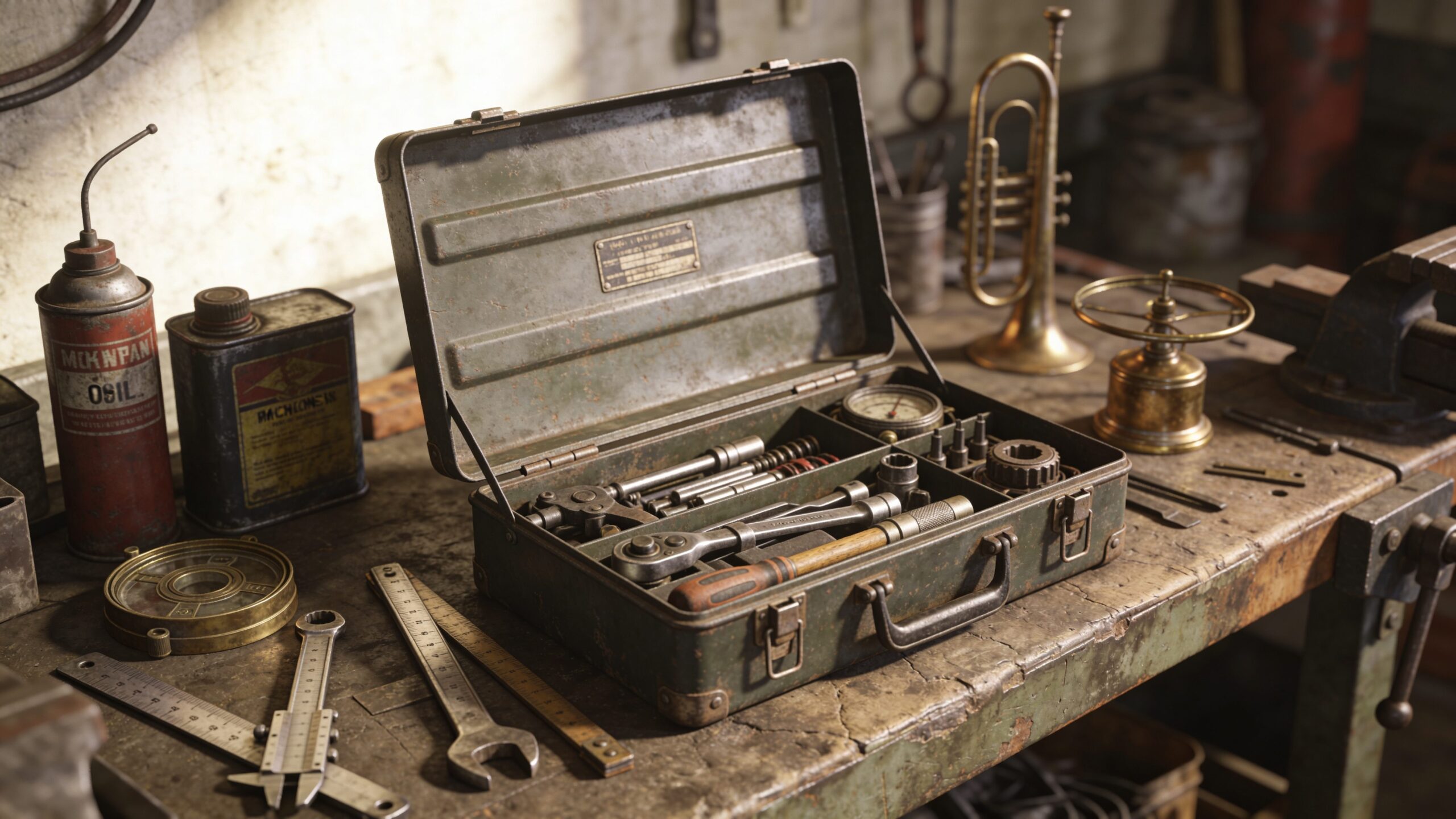
Functional Artifacts are where purpose meets presence. These are the objects that were built to work hard, solve problems, and endure daily use, yet somehow became striking pieces of visual character along the way. On Mancave Street, this category celebrates the tools, instruments, fixtures, machines, and everyday objects that blur the line between utility and art. From vintage drafting lamps and mechanical gauges to antique storage pieces, industrial stools, display-worthy hardware, and restored workbench essentials, functional artifacts bring authenticity into a space. They do more than decorate a mancave; they give it texture, story, and soul. Every artifact carries evidence of use: worn handles, aged metal, smooth edges, faded finishes, and clever engineering. These pieces remind us that great design was often born from necessity, not trends. Whether you collect, restore, display, or repurpose them, functional artifacts add a grounded, masculine, creative energy to any room. This is where history earns a second life.
A: It is an object that was made for use but also has collectible or decorative appeal.
A: Yes, they add history, texture, utility, and visual interest.
A: Preserve original character when possible and restore only what improves safety or usability.
A: Lamps, gauges, toolboxes, clamps, scales, and small measuring tools.
A: Many can, especially lamps, storage pieces, stools, and hand tools.
A: Estate sales, antique shops, salvage yards, auctions, and flea markets.
A: Brass, iron, steel, leather, hardwood, and aged aluminum all work well.
A: Group by material, function, size, or era for a curated look.
A: They can work decoratively, but originals usually carry more character.
A: Rarity, condition, maker, age, originality, and display appeal all matter.