
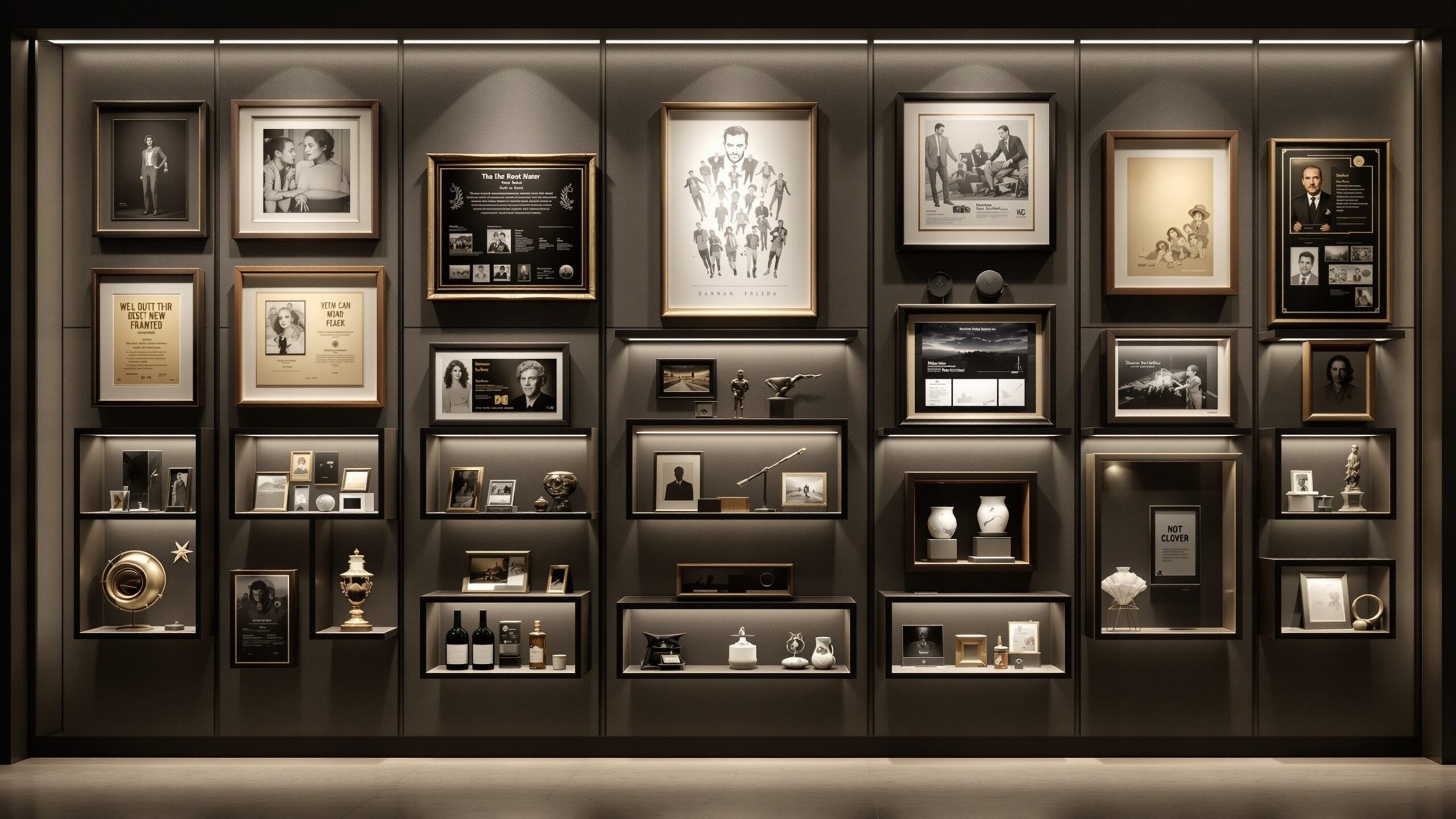
Artifact Walls & Displays are where a mancave becomes personal—and instantly unforgettable. This is the space where your story lives in plain sight: the signed memorabilia, vintage finds, hobby gear, trophies, travel relics, and one-of-one pieces you don’t want hidden in a closet. In this section of Mancave Street, you’ll find articles that turn “I have stuff” into a curated showcase that feels museum-clean, not cluttered. Learn how to plan a wall like a gallery, choose the right shelves, cases, and mounts, and use lighting to create depth without glare. We’ll cover layouts for everything from minimalist grids to dramatic feature walls, plus smart ways to protect fragile items, manage dust, and keep high-value displays secure. Whether you’re building a shadowbox wall, a floating shelf lineup, a glass-case corridor, or a full-on artifact gallery, these guides help you design with intention. Collect boldly, display confidently, and let every piece earn its place.
A: Use a theme, consistent spacing, and leave negative space around key pieces.
A: Adjustable spots or wall washers aimed to avoid glare, plus soft under-shelf LEDs.
A: Frames for flat items; shelves/shadow boxes for dimensional artifacts—mixing both adds depth.
A: Put your hero piece at eye level, then build outward and upward.
A: Hit studs when possible or add a backing board; use anchors rated for the load.
A: Use cases, glass-front cabinets, and fewer open surfaces for high-value items.
A: Yes—unify with matching frames/hardware and group items by story or era.
A: Matte black or warm wood tones are versatile and keep attention on the items.
A: Use ledges and modular shelves so you can swap pieces without patching holes.
A: Add focused accent lighting and reduce the item count to highlight the best pieces.