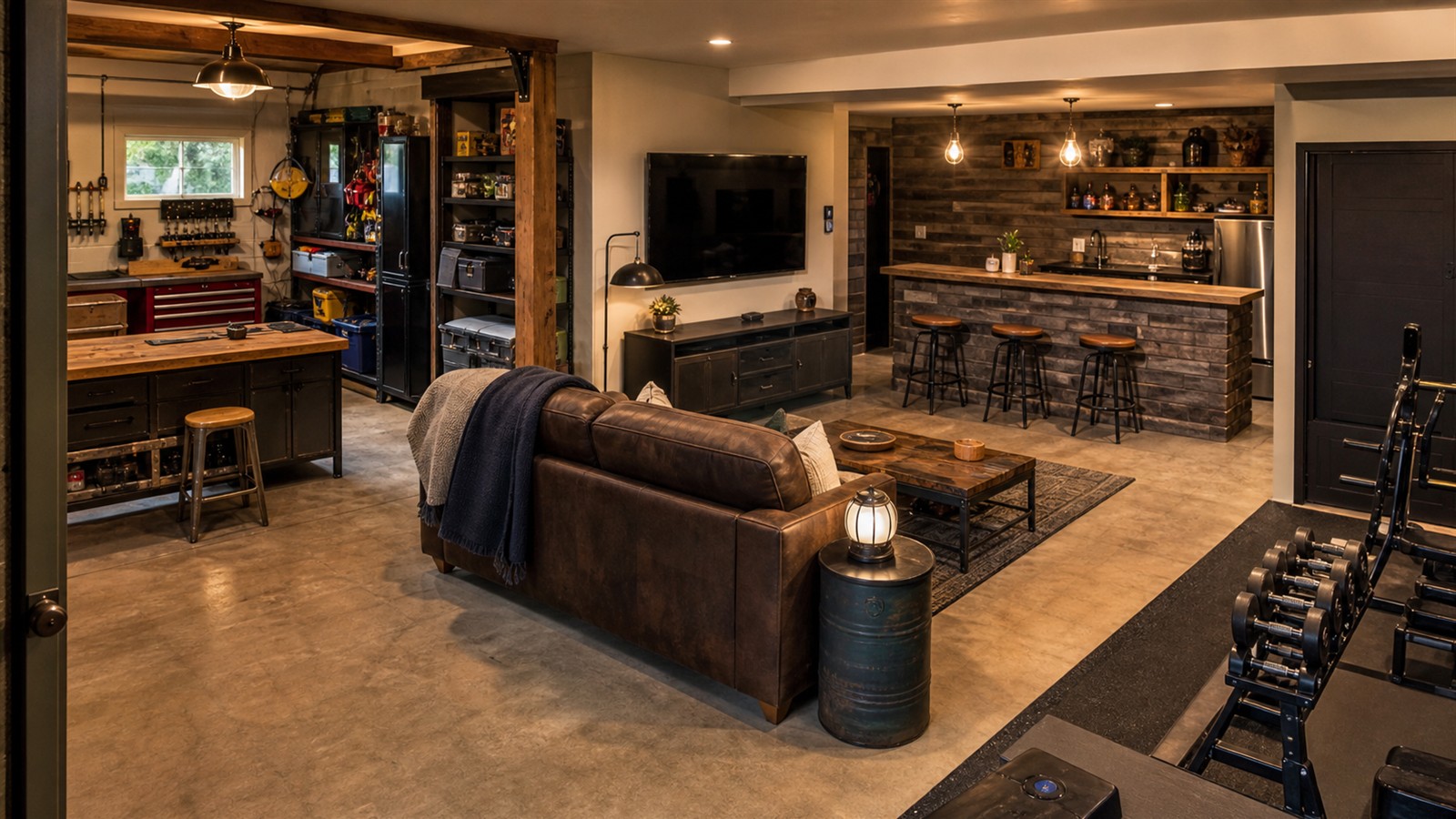
Small Man Cave Layout Ideas for Tight Spaces and Odd Rooms is really about control: controlling scale, movement, comfort, storage, lighting, and the impression the room makes from the first step inside. A mancave does not become better by adding every possible upgrade. It becomes better when the right choices fit the room, the budget, and the way the space will actually be used. For small man cave layout ideas, that means treating the room's limits as design information instead of problems to hide. The best result feels intentional, comfortable, and personal, whether the space is compact, luxurious, oddly shaped, or built to do more than one job. That kind of clarity makes the room easier to enjoy every time it is used. It also keeps later upgrades from feeling random.
A: Let the room's main constraint and main use guide the earliest choices.
A: Choose fewer pieces with clearer jobs, then protect the walking paths and sightlines.
A: Spend first on comfort, durable surfaces, lighting control, and the feature people will use most.
A: Custom feeling comes from exact fit, repeated finishes, hidden storage, and confident restraint.
A: Yes, if the room leaves room for future seating, displays, gear, and activity changes.
A: Too many competing finishes can make the room feel busy even when the pieces are expensive.
A: Use layers so the room can shift between practical setup, hosting, viewing, and quiet relaxation.
A: Storage should sit close to the activity it supports while staying visually quiet.
A: Use professional help for structural changes, electrical work, built-ins, HVAC, moisture issues, or major installations.
A: The room feels comfortable, coherent, easy to move through, and simple to reset after use.
Start With the Constraint the Room Gives You
small man cave layout ideas becomes much easier to plan when the first decision is based on the room's real constraint. That constraint might be limited square footage, a desire for luxury, a tight traffic path, an odd wall angle, or the need to make several activities feel natural in one place. Once the constraint is named, it stops being a frustration and becomes the design brief. Think about the room as something that has to perform more than once. It should feel good when it is freshly cleaned, when guests are using it, and when it is being reset after a long night. A choice that only works in one of those moments may not be strong enough for a hardworking mancave.
In a odd-shaped compact room, the best ideas are usually the ones that make the limitation feel intentional. A small room can feel tailored instead of cramped. A luxury room can feel composed instead of flashy. A planning-focused room can feel relaxed instead of over-engineered. The difference comes from choosing the few moves that matter most and letting the rest of the room support them. The surrounding details should support the same direction. If the room is compact, the details should reduce visual weight. If it is luxury-focused, they should add depth without shouting. If it is planning-focused, they should make the layout easier to understand and maintain.
That approach also protects the budget. Even high-end mancaves can waste money when every surface tries to be a feature. A clear constraint helps decide where to invest, where to simplify, and where to leave breathing room. This is where practical decisions become part of the style. Clear routes, reachable storage, glare control, comfortable seating depth, and durable finishes all make the space feel more polished because they remove little frustrations before they become daily recurring annoyances.
Give the Main Zone a Clear Purpose
The main zone should be obvious before any decoration is added. It may be the viewing area, the lounge seating, the bar, the display wall, or the flexible center of the room. For small man cave layout ideas, the anchor needs enough space around it to feel comfortable and enough support nearby to be useful. The surrounding details should support the same direction. If the room is compact, the details should reduce visual weight. If it is luxury-focused, they should add depth without shouting. If it is planning-focused, they should make the layout easier to understand and maintain.
A clear main zone makes secondary decisions easier. Tables, lighting, storage, shelves, and accent chairs can be placed according to how they help the anchor work. If a piece does not support the main zone or a necessary secondary function, it may be better left out. This is where practical decisions become part of the style. Clear routes, reachable storage, glare control, comfortable seating depth, and durable finishes all make the space feel more polished because they remove little frustrations before they become daily recurring annoyances.
Use Scale as a Design Tool
Scale is one of the quiet details that separates a polished mancave from a crowded one. Oversized pieces can make a small room feel blocked, while undersized pieces can make a luxury room feel unfinished. The right scale gives the room confidence without forcing people to move around obstacles. This is where practical decisions become part of the style. Clear routes, reachable storage, glare control, comfortable seating depth, and durable finishes all make the space feel more polished because they remove little frustrations before they become daily recurring annoyances.
Measure the open spaces as carefully as the furniture itself. Recliners need travel room, stools need pullout room, cabinet doors need swing space, and walkways need to stay comfortable when people are seated. These clearances are part of the design, not leftover space. Think about the room as something that has to perform more than once. It should feel good when it is freshly cleaned, when guests are using it, and when it is being reset after a long night. A choice that only works in one of those moments may not be strong enough for a hardworking mancave.
Visual scale matters too. A dark ceiling, a large sectional, or a dramatic bar can look excellent when balanced by quieter walls, open floor area, or low-profile storage. The goal is not to make every element small; it is to make the room feel proportioned. The surrounding details should support the same direction. If the room is compact, the details should reduce visual weight. If it is luxury-focused, they should add depth without shouting. If it is planning-focused, they should make the layout easier to understand and maintain.
Keep Storage Close but Quiet
Storage should support the activity without becoming the room's personality. In smaller mancaves, that might mean hidden benches, slim cabinets, floating shelves, or under-seat compartments. In luxury rooms, storage may be built into paneled walls, bar cabinetry, or media units so the room stays clean. Think about the room as something that has to perform more than once. It should feel good when it is freshly cleaned, when guests are using it, and when it is being reset after a long night. A choice that only works in one of those moments may not be strong enough for a hardworking mancave.
Good storage also makes the room easier to reset. Controllers, remotes, glasses, blankets, tools, chargers, and snacks all need obvious homes. When those homes are close to the activity, the mancave can be used hard without looking messy afterward. The surrounding details should support the same direction. If the room is compact, the details should reduce visual weight. If it is luxury-focused, they should add depth without shouting. If it is planning-focused, they should make the layout easier to understand and maintain.
Odd rooms reward precision because every angle, niche, and short wall can become either a problem or a useful design feature. The best storage choices are rarely the loudest ones. They disappear into the room until they are needed, then make the space feel smarter every time someone uses it. This is where practical decisions become part of the style. Clear routes, reachable storage, glare control, comfortable seating depth, and durable finishes all make the space feel more polished because they remove little frustrations before they become daily recurring annoyances.
Shape the Mood With Materials and Lighting
Materials and lighting carry much of the emotional weight in a mancave. Leather, wood, stone, metal, fabric, and acoustic surfaces all change how the room feels and how it performs. Lighting then decides whether those materials read as warm, dramatic, casual, or refined. The surrounding details should support the same direction. If the room is compact, the details should reduce visual weight. If it is luxury-focused, they should add depth without shouting. If it is planning-focused, they should make the layout easier to understand and maintain.
For small man cave layout ideas, layered lighting is especially useful because it lets the same room shift between modes. Bright task light may help during cleaning or setup, while low accent light makes movie nights, drinks, or quiet downtime feel more immersive. This is where practical decisions become part of the style. Clear routes, reachable storage, glare control, comfortable seating depth, and durable finishes all make the space feel more polished because they remove little frustrations before they become daily recurring annoyances.
Avoid the Upgrade That Creates a New Problem
Every upgrade should be checked for side effects. A bigger sofa may reduce movement. A glossy finish may add glare. A large bar may steal space from seating. A luxury detail may require maintenance that does not fit the way the room will actually be used. This is where practical decisions become part of the style. Clear routes, reachable storage, glare control, comfortable seating depth, and durable finishes all make the space feel more polished because they remove little frustrations before they become daily recurring annoyances.
The strongest mancaves are honest about tradeoffs. They choose comfort over excess when comfort matters more, drama over subtlety when the room can support it, and flexibility over permanence when the household needs change. That discipline makes the final result feel more expensive, not less. Think about the room as something that has to perform more than once. It should feel good when it is freshly cleaned, when guests are using it, and when it is being reset after a long night. A choice that only works in one of those moments may not be strong enough for a hardworking mancave.
A useful final test is to imagine hosting, relaxing alone, and cleaning up. If the room works in all three situations, the design is probably grounded enough to last. The surrounding details should support the same direction. If the room is compact, the details should reduce visual weight. If it is luxury-focused, they should add depth without shouting. If it is planning-focused, they should make the layout easier to understand and maintain.
Finish With One Strong Point of View
The last layer should make the room feel personal without scattering attention. A small mancave may need one bold material, one favorite display, or one sharp lighting move. A luxury mancave may need fewer visible objects so the craftsmanship can speak. A planning-focused room may need consistency more than novelty. Think about the room as something that has to perform more than once. It should feel good when it is freshly cleaned, when guests are using it, and when it is being reset after a long night. A choice that only works in one of those moments may not be strong enough for a hardworking mancave.
When small man cave layout ideas is finished well, the room feels easy to understand and comfortable to use. It does not need an explanation because the layout, materials, lighting, storage, and focal point all point in the same direction. That clarity is what makes the space feel finished rather than merely decorated. The surrounding details should support the same direction. If the room is compact, the details should reduce visual weight. If it is luxury-focused, they should add depth without shouting. If it is planning-focused, they should make the layout easier to understand and maintain.